
Karaoke Is a Performance, Not a Lesson
Most singers treat karaoke like a surprise exam: you arrive cold, the room is loud, someone hands you a mic, and the only plan is "hope for the best." That is how voices get strained and pitch gets blamed on nerves when the real problem was no warm-up and the wrong key.
This guide is a 15-minute pre-karaoke routine you can do in a car, a bathroom, or a quiet corner of the bar. It is not meant to replace long-term practice—it is meant to give you a repeatable checklist so you walk on stage knowing whether tonight's song is actually in your wheelhouse. If pitch usually falls apart from adrenaline more than from key choice, add the short reset in nervous pitch before performing.
What You Need (5 Minutes to Gather)
- Your song title and, if possible, the karaoke track key (many apps show it)
- Phone with mic access for the Pitch Detector
- Water—sip, do not chug right before singing
- A backup song in a safer key (second choice beats a heroic fail)
- Headphones if the venue is noisy (helps you hear yourself on pitch checks)
If you have never measured your range, run a quick Vocal Range Test earlier in the week—not five minutes before your turn. Karaoke night is for applying what you already know, not discovering your limits under a spotlight.
The 15-Minute Pre-Karaoke Timeline
Minutes 0–5: Gentle wake-up (not a workout)
Goal: get airflow moving without pushing your top notes. Follow the light section of the 15-minute daily warm-up tutorial and stop early if time is tight.
- 1 minute: easy posture—unlock knees, drop shoulders, one slow inhale that expands the ribs
- 2 minutes: lip trills or "ng" hums in mid-range only—no screaming, no highest note of the night yet
- 2 minutes: speak-sing the first line of your song at half volume, like telling a story
Red flag: tickling, pain, or sudden rasp means switch to your backup song or pass your turn. Pushing through at karaoke is how a fun night becomes a week of hoarseness. See practice when tired or hoarse for the full decision tree.
Minutes 5–10: Key check (the step most people skip)
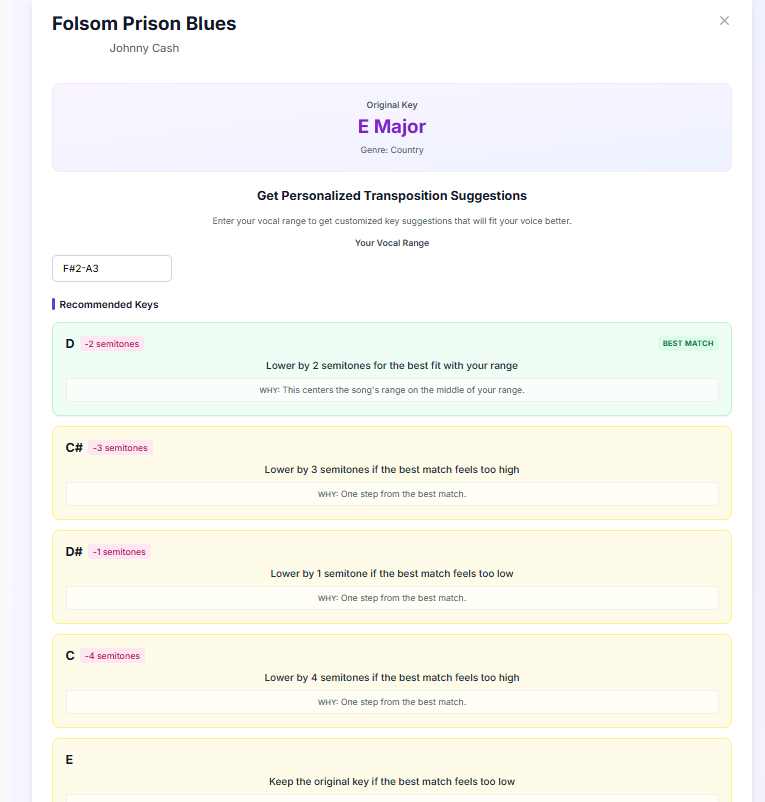
Open the Song Key Finder or confirm the key from your track. Then compare the highest sustained notes in the chorus—not just the one flashy peak—to your comfortable range. Tessitura matters more than a single high note: tessitura and comfortable range.
- Identify the top 2–3 notes that repeat in the chorus
- Play them on the Tone Generator and hum-match softly
- If you must strain or shout to reach them, transpose down 1–2 semitones before you order the track
- Sing only the chorus hook once at conversational volume while watching the Pitch Detector
A chorus that sits +30 cents sharp on every landing is usually too high or too loud, not "bad ears." Drop the key first; fix technique on easier nights. For a full transpose workflow, see how to transpose into your key.
Minutes 10–15: Go / no-go on the "big" song
Every karaoke room has a crowd-pleaser with a punishing high note. Use this honest filter:
- Green: chorus peaks land within ±15 cents at half volume—you can add emotion on stage
- Yellow: peaks are reachable but sharp or flat when you add volume—transpose or sing softer
- Red: peaks require shouting, cracking, or breathy flipping—pick another song tonight
Choosing a song you can sing well beats impressing the room for twelve seconds and losing the rest of the chorus. Your friends remember fun, not the highest note you almost hit.
Venue Reality: Noise, Monitors, and Nerves
Bar monitors are often quiet or muddy. You hear the room more than yourself, which pushes many singers sharp and loud. Before your turn, sing one line with one ear covered—old trick, still works. If you know you run sharp under pressure, rehearse the understated version in the bathroom: same words, half the volume, slightly slower tempo. Nerves add adrenaline; your prep should leave headroom, not assume perfect calm.
Alcohol dries the throat and dulls pitch judgment. One drink might feel fine; three turns "I sound amazing" into shouting. Hydrate between songs. If the room is smoking or extremely dry, shorten your set and favor mid-range tunes.
Sample Prep: Two Different Singers
Case A — Comfortable range, ambitious song
Maya's range test shows she can hit the song's peak in isolation, but the chorus sits high for two full lines. She transposes down one semitone, runs the chorus on the detector at speaking-plus volume, and logs "stable on hook, sharp on last word." On stage she softens that last word instead of punching it—green light.
Case B — Cold voice, favorite power ballad
James woke up hoarse. Warm-up feels scratchy at minute three. He switches from the power ballad to a mid-tempo song whose peak sits a fourth lower, transposed twice. He still gets his karaoke moment without bargaining with his voice for the rest of the week.
On Stage: Three Habits That Survive the Room
- First chorus at 70%: save volume for the second pass when you know the monitor mix
- Microphone distance: pulling back on loud notes prevents sharp splatter and feedback
- Breathe where you rehearsed: do not invent new breath marks under lights—use the phrase shapes you checked
If you feel pitch wobble mid-song, narrow your vowels slightly and reduce volume for one line—not a full technique overhaul, just a stabilizer until the chorus returns to familiar territory.
After Karaoke: Cool Down in 3 Minutes
Hum down from your speaking pitch on "ng" for 60 seconds. Sip water. Avoid whispering in the car—it is harder on the folds than gentle speech. If you were hoarse before the night started, plan a recovery day tomorrow instead of a heavy practice session.
Build a Personal Karaoke Shortlist
Keep three songs in your phone notes: safe (always green), stretch (yellow with transpose), and showpiece (only when warmed and healthy). Update keys after each range test. Song-picking principles: songs that fit your range. Between karaoke nights, a short daily routine makes prep faster because your pitch bias is already logged.
Common Karaoke Mistakes
- Warming up only the intro notes, never the actual chorus peaks
- Refusing to change key because "that's how the artist sings it"
- Singing three power songs back-to-back on a dry throat
- Blaming the mic when the detector already showed sharp bias in the bathroom
- Skipping backup songs—ego picks the set list, voice pays the bill
Quick Reference Card
- 0–5 min: gentle hum + speak-sing first line
- 5–10 min: confirm key, check chorus peaks, transpose if needed
- 10–15 min: go / no-go; pick backup if red
- On stage: 70% first chorus, mic distance, rehearsed breaths
- After: cool hum, water, no whispering
Next step: pick tonight's song, check the chorus key against your range, and transpose before you order the track.